
At first glance, hiring the cheapest moving company feels like common sense.
You search “local movers near me,” collect a few quotes, and one company comes in dramatically lower than the rest. Maybe hundreds lower. Naturally, that grabs your attention immediately. Moving is expensive already. Between deposits, utility setup costs, packing supplies, and taking time off work, most people are trying to save wherever they can.
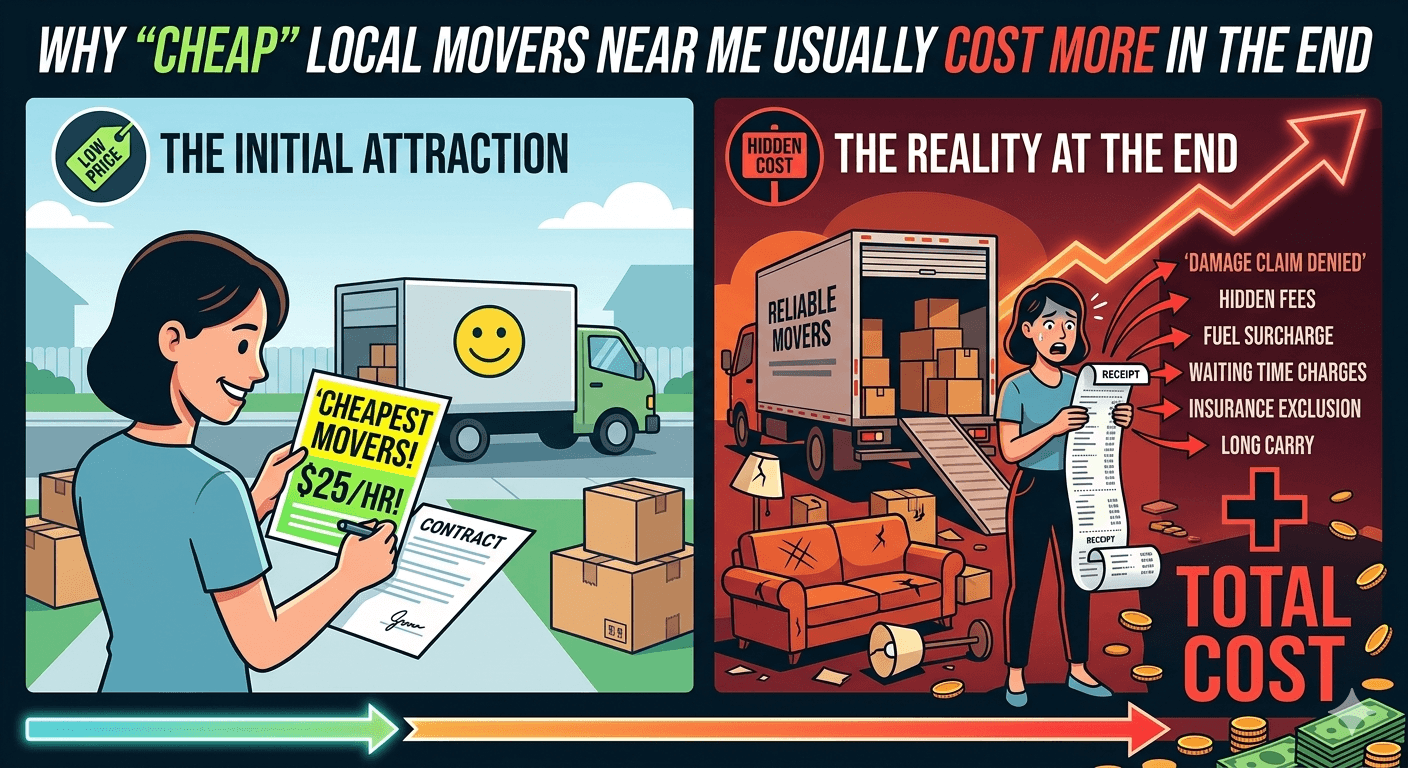
But moving companies are a bit like budget airlines. The low number you see upfront is not always the number you pay by the end.
And honestly, this is where people get caught.
A mover offering suspiciously low pricing often makes up for it somewhere else — hidden fees, rushed work, damaged furniture, delays, inexperienced staff, or vague pricing structures that suddenly change halfway through the move. Sometimes it’s subtle. Sometimes it becomes painfully obvious around hour five when the movers announce there’s an additional charge for stairs that nobody mentioned earlier.
The frustrating part is that customers usually discover these problems when they’re already committed. Your entire house is packed. Your lease is ending. The truck is outside. There’s no easy escape route at that point.
Not every affordable mover is bad, obviously. Some smaller companies genuinely offer fair pricing and excellent service. But extremely cheap moving quotes tend to raise questions for a reason.
Because proper moving services actually cost money to run.
The Cheap Quote Rarely Tells the Full Story
One thing many customers don’t realise is how flexible moving quotes can be.
Some companies intentionally keep their initial estimate as low as possible because they know most customers compare price before anything else. The cheaper quote wins attention. That’s the strategy.
Then the extra charges begin appearing later.
A moving quote that looked incredibly affordable can suddenly grow because of:
- Fuel surcharges
- Stair fees
- Long-carry charges
- Packing materials
- Mattress wrapping
- Appliance handling
- Weekend rates
- Overtime
- Waiting fees
- Additional labour
Individually, some of these fees sound reasonable enough. But together? They stack up quickly.
I’ve noticed that reputable movers usually spend more time asking questions before quoting. They want details about access points, elevators, fragile furniture, parking, property size, and distance. Cheap operators sometimes skip that process almost entirely because the goal is securing the booking first and discussing complications later.
That difference matters more than people think.
A Lower Price Usually Means Compromises Somewhere
Moving isn’t a low-overhead business.
There are trucks to maintain. Fuel costs. Insurance. Equipment. Staff wages. Scheduling systems. Vehicle licensing. Storage costs. Wrapping materials. Training. All of it adds up.
So when one company’s pricing sits dramatically below everyone else’s, there’s usually a reason behind it.
Maybe they:
- Hire inexperienced workers
- Operate older vehicles
- Rush jobs
- Skip insurance coverage
- Understaff moves
- Outsource labour casually
- Overbook schedules
Customers don’t always notice these issues immediately. Sometimes the problems only reveal themselves once the move is already underway.
A scratched dining table here. A missing box there. Movers arriving two hours late because the previous job ran over schedule.
None of these things seem catastrophic individually. But combined, they create the kind of moving day people remember for all the wrong reasons.
Case Study: The “Cheap Move” That Ended Up Costing Double
A family relocating from a two-bedroom apartment recently shared an experience that perfectly explains this problem.
They received three quotes from local moving companies. Two estimates were fairly similar, while the third was almost 35% cheaper. Naturally, the cheaper quote looked attractive. They booked immediately.
At first, everything seemed fine.
Then the moving day arrived.
The truck showed up late. Only two movers arrived instead of the four originally discussed. Because the apartment building had elevators and underground parking restrictions, the move took far longer than expected. The company then added:
- Additional hourly charges
- Stair access fees
- Extra fuel costs
- Overtime
- Charges for protective wrapping
To make matters worse, several furniture items were scratched during unloading, including a coffee table and refrigerator door.
The final invoice ended up exceeding the quote from the more established moving company they originally rejected.
And honestly, the biggest frustration wasn’t even the money. It was the stress. The move ran nearly six hours longer than expected, and they still needed to organise furniture repairs afterward.
That story isn’t unusual.
Poor Handling Can Become Very Expensive
People tend to underestimate how easily furniture gets damaged during rushed moves.
A professional mover understands things like:
- Weight distribution
- Securing items properly
- Protecting corners and surfaces
- Navigating narrow hallways
- Loading trucks strategically
- Preventing items from shifting in transit
Inexperienced crews often don’t.
This becomes especially risky with:
- TVs
- Mirrors
- Office desks
- Appliances
- Glass furniture
- Antique items
- Electronics
- Large couches
One badly secured load can cause thousands in damage surprisingly quickly.
And unfortunately, cheaper moving companies sometimes lack proper insurance processes when these situations happen. Customers then find themselves arguing over liability instead of settling into their new home.
That’s not exactly how anyone wants a moving day to end.
Delays Create Costs Most People Don’t Anticipate
Time delays during a move affect more than convenience.
A delayed move can trigger:
- Extra rental costs
- Missed building access windows
- Storage fees
- Additional cleaning charges
- Time off work
- Rescheduled internet installations
- Problems with estate agents or landlords
This is where “cheap movers” can become unexpectedly expensive.
Some companies intentionally book too many jobs in a single day to maximise earnings. On paper, it looks efficient. In reality, one delayed move creates a domino effect that impacts every customer afterward.
You can usually spot this issue in reviews.
People will mention things like:
- “Arrived four hours late”
- “Rushed the job”
- “Didn’t finish on the same day”
- “Stopped answering calls”
- “Changed arrival times repeatedly”
Those patterns tell a story.
Reliable movers generally build realistic scheduling into their operations. That slightly higher price often reflects proper planning rather than inflated profit margins.
Cheap Movers Sometimes Operate Without Proper Insurance
This part gets overlooked constantly.
Many customers assume every moving company automatically carries proper insurance. That’s not always true.
Some budget operators minimise costs by limiting coverage or operating with inadequate protection. Others rely on very basic liability structures that don’t fully cover damaged goods.
That becomes a serious issue if:
- Furniture breaks
- Walls get damaged
- Electronics stop working
- A mover gets injured
- Items disappear during transit
Suddenly the cheap quote doesn’t look nearly as attractive anymore.
A professional moving company should willingly explain:
- What insurance they carry
- What is covered
- Claim procedures
- Coverage limits
- Transit protection details
If a company becomes vague or defensive when discussing insurance, that’s usually not a great sign.
Online Reviews Usually Reveal the Truth
One thing I’ve noticed with moving companies is that reviews often become extremely revealing after the tenth or twentieth comment.
You start spotting patterns.
With questionable budget movers, common complaints include:
- Hidden fees
- Damaged goods
- No communication
- Late arrivals
- Unprofessional staff
- Last-minute cancellations
- Unexpected price increases
A single bad review doesn’t necessarily mean much. Even excellent companies occasionally have difficult days.
But repeated complaints about the same issues? That’s different.
Customers often ignore warning signs because the price difference feels too tempting. And to be fair, sometimes the gamble works out perfectly fine.
But when it doesn’t, it tends to go very wrong.
The Stress Factor Gets Ignored Completely
People usually calculate moving costs financially, not emotionally.
But stressful moves have a real impact.
A badly managed relocation can turn an already exhausting day into absolute chaos. Suddenly you’re:
- Arguing about pricing
- Chasing unanswered calls
- Supervising careless handling
- Reorganising schedules
- Cleaning unexpected damage
- Waiting hours for delayed trucks
It drains people.
There’s something mentally exhausting about watching strangers mishandle your belongings while your entire routine disappears into cardboard boxes around you.
Professional movers reduce that stress because the process feels controlled. Organised. Predictable.
That peace of mind has value, even if it doesn’t appear directly on an invoice.
Why Better Movers Charge More
Sometimes customers assume higher pricing automatically means companies are overcharging.
In reality, higher-quality movers often simply have higher operating costs because they run more professionally.
That includes:
- Experienced staff
- Better trucks
- Insurance coverage
- Quality equipment
- Furniture protection materials
- Structured scheduling
- Trained crews
- Customer support systems
Those things aren’t cheap.
But they usually lead to:
- Faster moves
- Less damage
- Better communication
- Fewer delays
- More accurate quotes
- Safer transport
Ironically, paying slightly more upfront often reduces overall costs because fewer problems happen during the move itself.
How to Find Movers That Offer Real Value
The best moving company isn’t necessarily the cheapest or the most expensive.
It’s the company that:
- Explains pricing clearly
- Communicates properly
- Has consistent reviews
- Shows proof of insurance
- Provides detailed quotes
- Arrives on time
- Handles belongings carefully
Good movers also ask questions before quoting.
If a company gives you a price within thirty seconds without asking about:
- Stairs
- Property size
- Access restrictions
- Large furniture
- Elevators
- Parking
- Fragile items
…that should probably concern you a little.
Accurate moving quotes require information.
The companies taking time to assess properly are often the ones trying to avoid unpleasant surprises later.
Sometimes “Affordable” Is Better Than “Cheap”
There’s a difference between affordable pricing and unrealistically low pricing.
Affordable movers generally balance:
- Fair labour costs
- Professional service
- Transparent pricing
- Reasonable scheduling
- Proper handling
Cheap movers sometimes focus purely on winning the booking.
Customers only realise the difference afterward.
And unfortunately, by then the move is already happening.
Key Takeaways
- Extremely cheap moving quotes often exclude important additional charges.
- Hidden fees can significantly increase final moving costs.
- Budget movers may cut corners on staff, equipment, scheduling, or insurance.
- Furniture damage and delays can quickly outweigh initial savings.
- Professional movers usually provide more accurate quotes and better communication.
- Online reviews often reveal recurring service problems.
- Reliable movers reduce stress and minimise moving-day complications.
- Paying slightly more upfront often saves money overall.
FAQ
1. Why are cheap movers sometimes more expensive in the end?
Because many low-cost movers add hidden fees later or create issues like delays and damaged furniture that lead to additional expenses.
2. Are all affordable moving companies bad?
No. Some smaller movers offer excellent value. The concern is usually with companies whose pricing seems unrealistically low compared to competitors.
3. What hidden moving fees should I ask about?
Ask about stair fees, fuel costs, overtime, packing materials, appliance handling, weekend charges, and long-distance carrying fees.
4. How important is moving insurance?
Very important. Insurance helps protect you financially if furniture, electronics, or property are damaged during the move.
5. What are warning signs of unreliable movers?
Vague quotes, poor communication, lack of reviews, no insurance information, and unusually low pricing are common warning signs.
6. Should I choose movers based only on price?
Probably not. Reliability, professionalism, transparency, and experience usually matter far more than simply choosing the lowest quote.
Conclusion
Searching for cheap local movers is understandable. Most people are trying to manage moving costs carefully, and nobody wants to overspend unnecessarily.
But extremely cheap moving quotes often come attached to compromises customers only discover later. Hidden fees, rushed work, damaged belongings, poor communication, and major delays can quickly erase any upfront savings.
And honestly, moving is stressful enough already.
A reliable moving company does more than transport furniture. They help make an overwhelming day feel manageable. They arrive prepared, communicate clearly, protect your belongings properly, and reduce the chances of unnecessary problems.
That reliability is usually worth paying for.
Because when moving day finally arrives, most people don’t care about finding the absolute cheapest company anymore. They care about whether everything gets from one home to the next safely, efficiently, and without turning the entire day into a disaster.